Now Reading: From the Grand Hall to Production Budgets: AI Runs Through Venice 83
-
01
From the Grand Hall to Production Budgets: AI Runs Through Venice 83

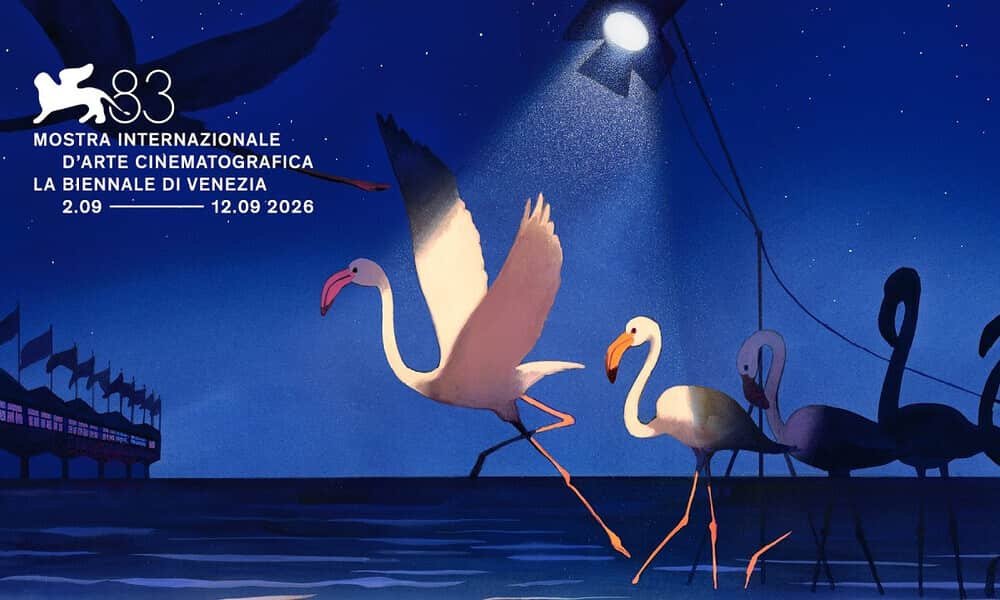
At Venice 83, artificial intelligence changes name depending on the room: artistic language in films, democratization at festivals, efficiency in production and a threat to trust.
In the official selection it is a language, at festivals it democratizes cinema, in the market it reduces costs and at conferences it threatens truth: in Venice, artificial intelligence changes its name in every room.
At Venice 83, the debate over artificial intelligence now runs through the entire film-production chain. In Be Brave, image generation enters directly into the work and is claimed as a narrative choice; the Reply festival instead shows how the same tools make it possible to create films that would otherwise be incompatible with the means available.
The Venice Production Bridge then moves the question from the individual project to the production model, envisioning smaller studios and less expensive workflows.
AI appears simultaneously in the official selection, industry meetings, parallel awards and statements by the festival’s central figures. More than deciding whether to accept it, Venice shows the attempt to establish which uses can be called art, opportunity or efficiency without saying the word replacement too clearly.
In the official selection, AI becomes an authorial choice
The most visible case is Be Brave, a 90-minute Italian documentary directed by Francesco Carrozzini and included in Venice Open Out of Competition. The film retraces the story of Renzo Rosso, founder of Diesel and OTB, with appearances by Anna Wintour, John Galliano, Jovanotti and Glenn Martens. AI is used to move through the different periods of the entrepreneur’s life and, according to Carrozzini, arises from a narrative necessity rather than technological fascination. The Biennale’s description presents it as a mirror of Rosso’s provocative communication style, thus translating generative use into the traditional vocabulary of auteur cinema.
Alberto Barbera presented Be Brave while urging people not to reduce the debate over AI to risks involving jobs, copyright and artists’ likenesses, but also to consider the creative possibilities made accessible by the technology. The interventions that emerged during the festival, however, showed how difficult it is to separate those possibilities from their consequences. George Clooney moved the discussion beyond film production, observing that deepfakes do not merely make falsehood credible, but also make it possible to discredit an authentic document as artificial.
Maggie Gyllenhaal brought the same problem back inside the image: after experimenting in Flesh Impact with a face of Marilyn Monroe generated over that of Dakota Johnson, she concluded that the greater resemblance erased the vitality of the performance. What AI adds on a technical level may therefore be obtained by subtracting something more difficult to reconstruct: first trust in images, then the presence of the performer.
At the market, the authorial choice goes back to being called savings
The most concrete shift took place at the Hotel Excelsior, where the Venice Production Bridge hosted the panel AI x Cinema: The 10,000 Parallel Universes Initiative. TapNow and HappyHorse, a project of the Alibaba Token Hub, presented films and a global incubation program for creators, new productions and intellectual properties.
On September 6, the Reply AI Film Festival will also award ten short films selected from more than 3,000 submissions from 76 countries, with a jury chaired by Gabriele Salvatores. The selected projects openly state what the traditional industry prefers to leave in the background: A Face Only a Mother Could Love was created with no budget, cast or crew, while Passenger generated earthquakes, tsunamis and destroyed cities while avoiding the costs of conventional effects.
British finalist Mike Bennion said he had been contacted by a Hollywood production that had run out of money to see whether AI could fill the gap at a lower price. The case does not appear isolated: according to Catherine Hardwicke, even Oscar-nominated directors and people in charge of major productions are already experimenting with these tools, especially for backgrounds and previsualization. These are low-visibility uses, easier to introduce without turning every film into an ideological statement, but precisely for that reason they indicate that the industrial transition has already begun.
In short, Venice too is trying to build the vocabulary through which cinema will distinguish AI tools that help an author from those that eliminate a worker: in the Sala Grande they are called language, at the festival democratization, in producers’ rooms efficiency; the word replacement remains outside the program, even when it describes more precisely what everyone has come to discuss.