
Now Reading: The AI Data Center Is Becoming a System, Not a GPU
-
01
The AI Data Center Is Becoming a System, Not a GPU

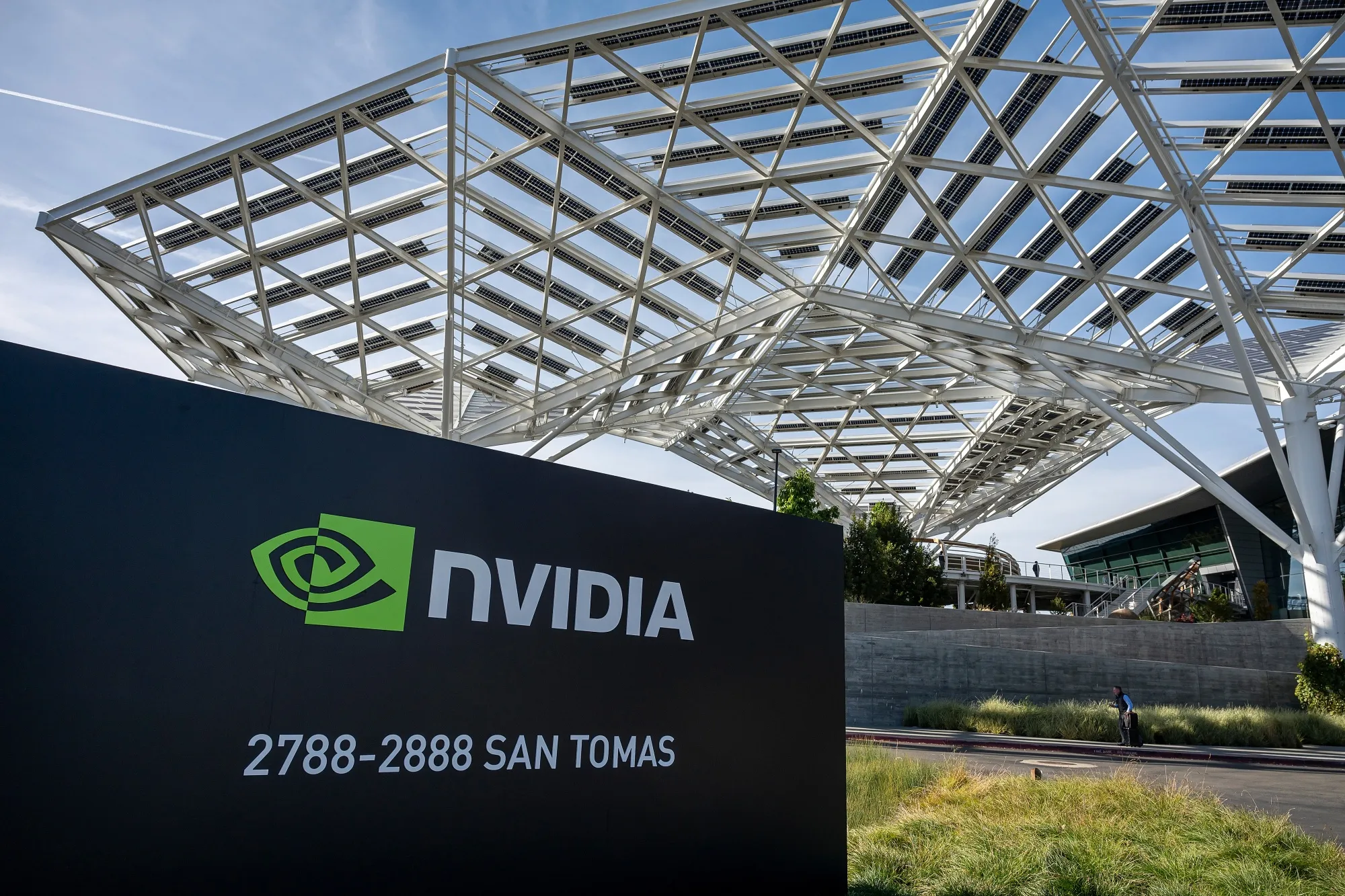
The next infrastructure contest may not be about the best GPU. It may be about who can make different chips, memory and networks behave like one coherent machine.
To understand contemporary AI, we have become accustomed to looking at one acronym: GPU. To understand the next phase of infrastructure, we may have to look less at the individual chip and more at how different chips work together.
On October 8, 2026, Upscale AI, a startup backed in part by Nvidia, introduced Token Fabric, a platform designed to connect AI accelerators from different suppliers inside the same data center. Reuters reported that the aim is to make heterogeneous infrastructure easier to build, avoiding a world in which every family of accelerators requires a separate networking system.
The announcement matters because it challenges a common simplification: the AI data center as a vast field of identical GPUs. In reality, the market is adding more kinds of accelerators, and interoperability is becoming strategically important.
An AI data center is not just a pile of GPUs
Servers, storage, networking, power and cooling have to be treated as one system. AI makes that integration even tighter.
A model distributed across hundreds or thousands of accelerators must constantly move enormous amounts of data between chips, memory and different nodes. If the network is slow or inefficient, the most powerful accelerator can sit idle while a portion of the invested capital produces nothing.
That is why networking has become one of the strategic layers of AI infrastructure. What matters is not only how many operations a GPU can perform, but how quickly it can communicate with the rest of the system.
Why use different chips inside the same data center?
Uniformity has obvious advantages. It simplifies software development, maintenance and optimization. But the growth of AI workloads makes heterogeneous hardware increasingly attractive.
One accelerator may be optimized for training very large models, another for inference, another for a specific workload or a better performance-per-watt ratio. Depending on a single supplier also increases exposure to availability, pricing and manufacturing capacity.
The market is therefore moving toward an ecosystem in which Nvidia remains central but is not the only actor. AMD, Google, Amazon and others are building their own accelerators and architectures. The problem becomes how to combine that variety without turning the data center into a collection of incompatible islands.
Lock-in does not live only inside the chip
Discussion of Nvidia’s dominance often focuses on CUDA, the software ecosystem developers use to program the company’s GPUs. That advantage was built over years through tools, libraries and compatibility.
Infrastructure lock-in can also exist at the networking layer. If an accelerator works efficiently only with a particular interconnect, replacing or combining it with another supplier becomes more difficult. A network that can manage heterogeneous hardware can reduce part of that constraint.
That does not make every chip interchangeable. Architectural, software and performance differences remain. But infrastructure can be designed so that each hardware choice does not become an irreversible decision.
Software becomes the operating system of the data center
The most interesting consequence is that competition moves toward orchestration software. If a workload can be assigned automatically to the accelerator best suited to it, the data center becomes a platform capable of treating different resources as one coordinated pool.
This resembles what happened in traditional cloud computing: users do not necessarily need to know which physical server is running an application. They request a resource and the system decides where to place it.
AI is more complicated because memory, interconnects and chip characteristics directly affect model performance. But the principle is similar: abstract the hardware so the infrastructure becomes more flexible.
Can Nvidia profit from a world that is less dependent on Nvidia?
The fact that Nvidia backs Upscale AI makes the story less paradoxical than it first appears. A multi-chip market can reduce dependence on a single architecture while also increasing the overall number of AI data centers and making it easier to integrate Nvidia GPUs alongside other accelerators.
Interoperability can therefore threaten lock-in and accelerate market growth at the same time. A dominant hardware supplier may prefer to participate in a more open ecosystem rather than leave the integration layer entirely to others.
The bottleneck moves
GPUs remain a strategic resource for AI. But the more accelerators the market adds, the more pressure moves toward everything connecting them: memory, networking, interposers, packaging, energy and software.
On the same day as the Upscale AI announcement, GlobalFoundries and TSMC announced a $2 billion agreement to produce silicon interposers in the United States. Those components are essential to advanced AI packages because they connect processors and high-speed memory. The deal shows how value is spreading across an increasingly complex supply chain.
The next data-center contest, then, may not simply be “who owns the best GPU?” It may be “who can build the best system from different chips, memory and networks?” That distinction matters because it turns AI from a market for individual components into a market for architectures.